Aerial silks vs hoop: the eternal beginner's dilemma
So you've decided to try aerial acrobatics - congratulations! But now comes the first big question: should you start with aerial silks or aerial hoop? Both disciplines are stunning, both will challenge your body in ways you never expected, and both are available at Flying Stars studio in Bratislava. Let's break them down so you can make an informed choice.
What are aerial silks?
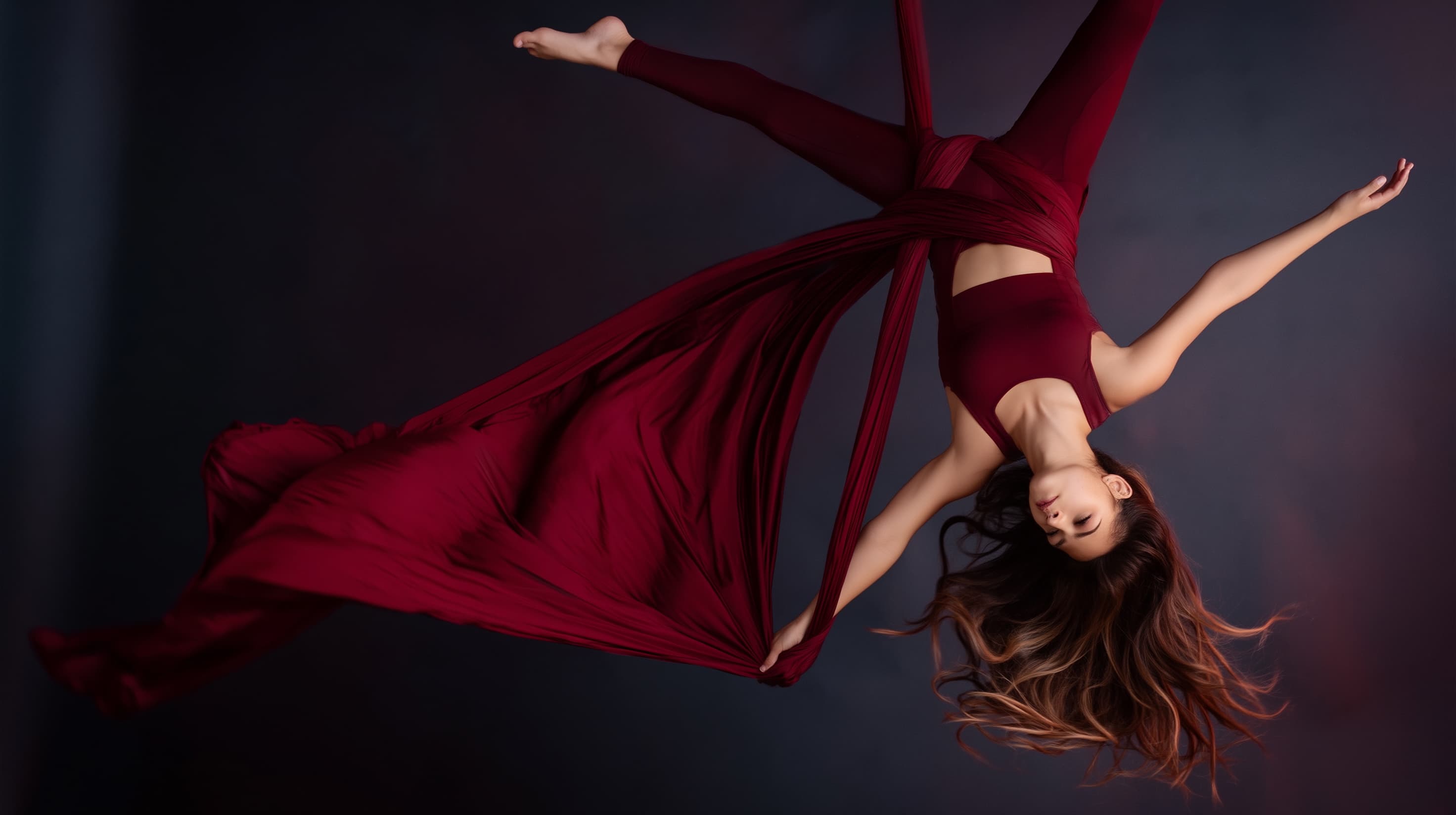
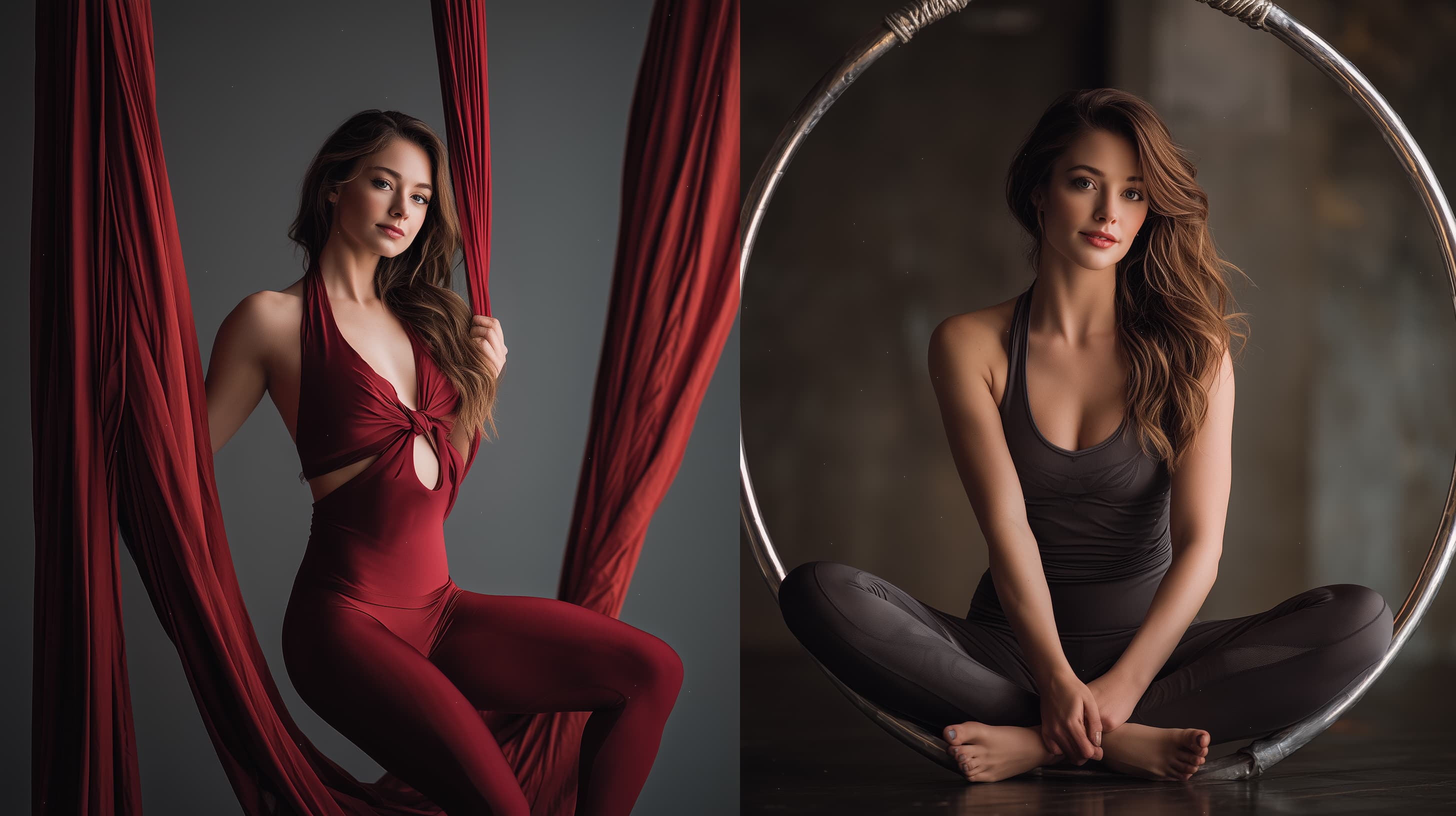
Aerial silks consist of two long panels of fabric suspended from the ceiling. You climb, wrap, and spin your way into beautiful poses and dramatic drops. Silks are the discipline most people picture when they hear "aerial acrobatics" - think flowing fabric, elegant lines, and gravity-defying figures.
What makes silks special
- Creative freedom - the fabric allows for an almost unlimited number of wraps, ties, and figures
- Full-body workout - climbing alone engages your arms, core, back, and legs simultaneously
- Graceful aesthetics - the flowing fabric creates dramatic visual effects
- Progressive difficulty - you can start with simple poses and gradually work toward complex drops and sequences
What is aerial hoop?
Aerial hoop (also called lyra) is a metal ring suspended from the ceiling. You perform poses, spins, and transitions on and inside the hoop. If silks are poetry, hoop is sculpture - strong, defined shapes against an elegant circular frame.
What makes hoop special
- Clear structure - the solid ring gives you a stable apparatus to hold onto
- Quick wins - many beginners achieve their first impressive pose faster than on silks
- Upper body strength - hoop builds serious grip and shoulder strength
- Dynamic movement - spinning on the hoop is an exhilarating experience from day one
Difficulty comparison
Getting started
Aerial hoop is often considered slightly easier for absolute beginners. The solid metal ring provides a clear, stable surface to grip, and basic sitting positions on the hoop can be learned within the first few classes. With silks, the fabric is flexible and requires more coordination to manage - your first classes will focus heavily on learning to grip, climb, and control two separate panels of material.
Strength requirements
Both disciplines demand upper body and core strength, but in different ways. Silks require significant grip endurance because you're constantly holding your bodyweight on fabric. Hoop requires strong pulling strength to mount the apparatus and maintain positions on a narrower surface. Neither requires you to be strong before you start - you'll build the necessary strength as you train.
Flexibility
Silks tend to reward flexibility more visibly. Many advanced silk figures rely on splits, backbends, and deep stretches. Hoop also benefits from flexibility, but you can achieve a wide range of impressive figures with moderate flexibility. If you're naturally flexible, you may progress faster in silks. If flexibility isn't your strongest point yet, hoop offers plenty of beautiful figures while you work on it.
Pain factor
Let's be honest - both will leave you with some bruises and sore spots at first. Silks create friction burns on your skin (which is why we recommend long sleeves and leggings). Hoop puts pressure on specific points - the backs of your knees, your hips, and your hands. Most people find that their body adapts within 3-4 sessions, regardless of which discipline they choose.
Body type considerations
One of the best things about aerial arts is that there's no single "ideal" body type. That said, your natural tendencies might make one discipline feel more intuitive at first:
- If you have strong grip strength, you may find silks climbing comes naturally
- If you have good upper body pulling strength, mounting the hoop will feel more accessible
- If you're naturally flexible, silks will let you showcase that range of motion quickly
- If you prefer a compact, controlled style, hoop's defined structure may feel more comfortable
- If you're tall, you'll have a longer reach on both apparatus, which can be an advantage on silks especially
Remember: these are tendencies, not rules. We've seen every body type thrive on every apparatus.
Decision guide
Still unsure? Here's a quick guide:
Choose silks if you...
- Love the look of flowing fabric and dramatic drops
- Enjoy creative expression and want endless variety
- Are patient with a longer learning curve
- Want the most intense full-body workout
Choose hoop if you...
- Prefer a solid surface to hold onto
- Want to see visible progress quickly
- Enjoy spinning and dynamic movement
- Like clean, defined shapes and poses
Choose both if you...
- Can't decide (honestly, this is the best answer)
- Want to cross-train and develop well-rounded aerial skills
- Love variety in your workouts
Why try both
Here's a secret that experienced aerialists know: training multiple disciplines makes you better at all of them. Silks build the grip endurance and body awareness that helps on hoop. Hoop builds the pulling strength and spatial awareness that helps on silks. Many of our students at Flying Stars start with one and quickly add the other to their weekly schedule.
The most important thing is not which one you choose first - it's that you show up to your first class. Both disciplines will transform your body, challenge your mind, and give you a creative outlet unlike anything else.
Ready to find out which one is your favourite? Check out the class schedule at Flying Stars in Bratislava and book your first aerial silks or aerial hoop session today!