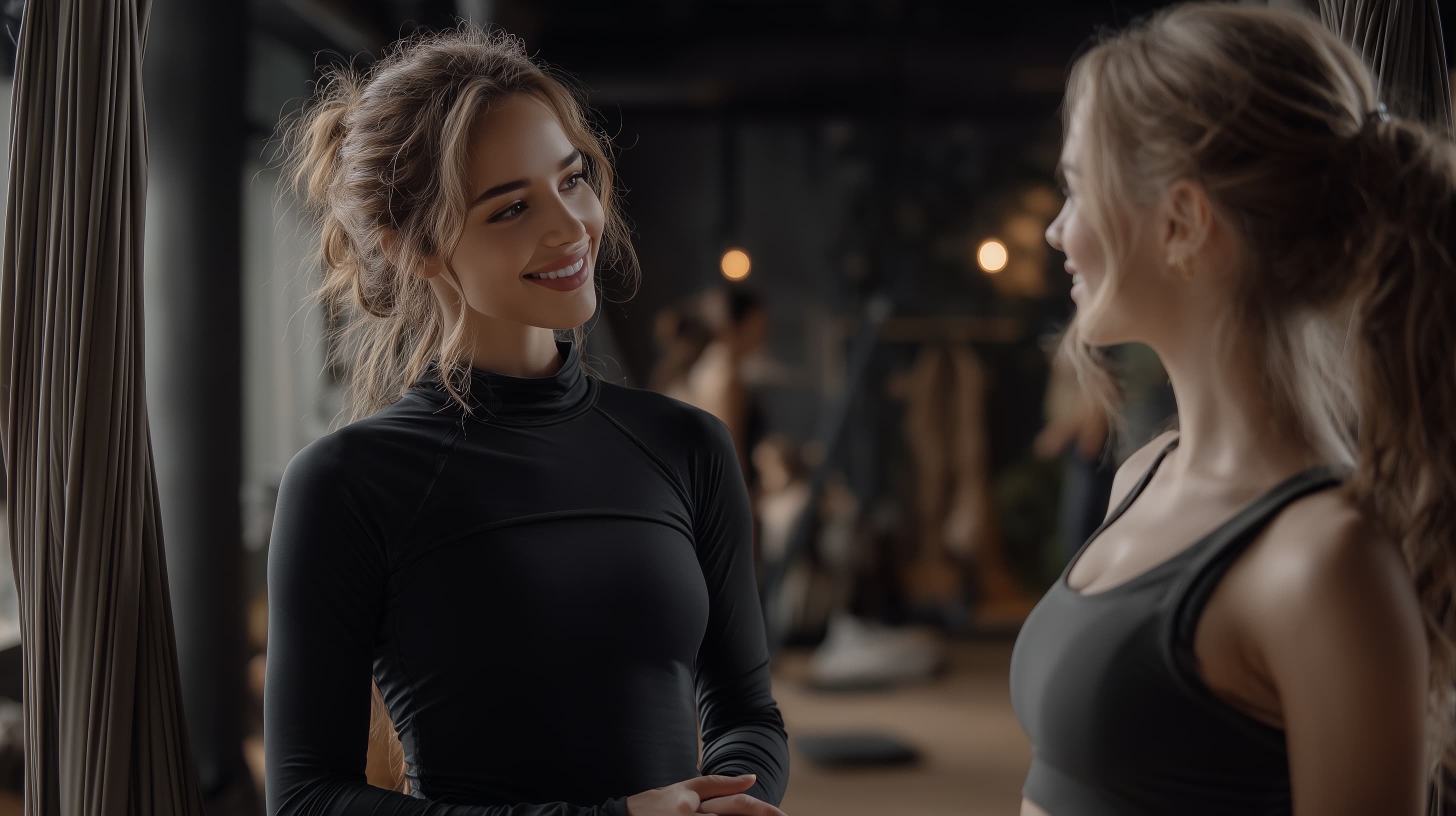
Your first aerial class is closer than you think
So you've signed up for your first aerial class - congratulations! Whether you're trying aerial silks, aerial hoop, aerial hammock, or aerial loops, walking into the studio for the first time can feel both exciting and nerve-wracking. This complete guide covers everything you need to know about what to expect at your first aerial class so you can walk in feeling confident and ready.
What to wear
Choosing the right outfit makes a big difference in comfort and safety. Here's what works best:
- Long leggings - full-length, fitted leggings that cover your ankles. Avoid shorts - the fabric and apparatus will press against your skin, and bare legs mean friction burns.
- A fitted top with sleeves - ideally long sleeves or at least a top that covers your armpits. Loose or baggy clothing can get caught in the apparatus.
- No zippers, buttons, or embellishments - anything that sticks out can snag on fabric or damage equipment.
- Bare feet or socks with grip - most aerial training is done barefoot. Some studios allow grip socks for hammock or loops classes.
The golden rule: think snug, stretchy, and skin-covering. Save the crop tops for after you've built some calluses.
What to bring
Keep it simple:
- A water bottle - you'll be more thirsty than you expect. Aerial work is a full-body workout.
- A small towel - sweaty hands and apparatus don't mix well.
- A hair tie - long hair needs to be securely tied back so it doesn't tangle in the equipment.
- A positive attitude - seriously, the willingness to try is the most important thing you can bring.
What NOT to bring
Leave these at home or in your locker:
- Jewelry - rings, bracelets, necklaces, and dangling earrings can get caught, scratch equipment, or injure you. Remove everything before class.
- Watches and fitness trackers - they press into your skin under wraps and can damage the apparatus.
- Lotions, oils, or hand cream - these make your skin slippery and reduce your grip. Skip moisturizer on training days, at least on your hands and arms.
- Long nails - they can tear fabric and are uncomfortable when gripping. Trim them before class if possible.
Physical preparation
Here's the honest truth: you don't need to be in shape to start. Aerial classes for beginners are designed for people with no prior experience and no specific fitness level. That said, a few things can help:
- Eat a light meal 1.5-2 hours before class. Training on a full stomach is uncomfortable, but so is training on empty.
- Stay hydrated throughout the day, not just during class.
- Get a good night's sleep - your body and brain need to be alert for learning new movements.
- Skip the intense workout the day before. Give your muscles a chance to be fresh.
Don't worry about doing pull-ups, push-ups, or any other training first. Strength comes with practice, and your trainer will meet you exactly where you are.
During class
Warm-up (10-15 minutes)
Every aerial class starts with a thorough warm-up. Expect a combination of cardio, joint mobility exercises, and activation drills for your shoulders, core, and hips. This isn't optional - warm muscles are safer muscles. Even if you've warmed up on your own, do the full warm-up with the group.
Learning the basics (30-40 minutes)
This is where the fun begins. In your first class, you'll work on:
- Basic grips and holds - how to properly hold the silk, hoop, or hammock. Your trainer will show you safe hand positioning.
- Simple climbs or mounts - getting onto or into the apparatus for the first time. It might feel awkward, and that's completely normal.
- Foundational poses - your first figures at a low height. These build the muscle memory you'll use for everything that follows.
- Body positioning - learning to engage your core, point your toes, and understand how your body works in the air.
Your trainer will demonstrate each move, then guide you through it step by step. You'll have plenty of time to practice, and they'll be right there to spot you.
Cool-down (5-10 minutes)
Class ends with stretching and cool-down exercises. This is essential for reducing soreness and improving flexibility over time. Pay attention to this part - recovery starts before you leave the studio.
After class
How you'll feel
Let's be real:
- Your hands will be sore. Gripping is hard work, and your hands aren't used to it yet. This gets better fast.
- You'll discover muscles you didn't know existed. Especially in your forearms, shoulders, and core.
- You might have some bruises. Especially behind the knees and on the inner arms. They're a badge of honor in the aerial world.
- You'll feel accomplished. Even if all you did was hold on and hang - that's a real achievement.
Recovery tips
- Stretch gently that evening or the next morning.
- Use a foam roller on sore muscles if you have one.
- Apply arnica or a cooling gel to bruises if they bother you.
- Rest for at least a day before your next aerial session. Your muscles need time to repair and grow stronger.
- Eat protein-rich food after class to support muscle recovery.
- Stay hydrated - drink extra water in the hours after training.
Common fears addressed
"I'm not strong enough"
This is the number one fear we hear, and it's completely unfounded. Nobody walks into their first aerial class already strong enough - you build strength by doing it. Beginner classes are structured so that you can participate fully regardless of your starting fitness level. Within a few weeks of regular training, you'll be amazed at what your body can do.
"I'm afraid of heights"
In your first classes, you won't be going high at all. Most beginner exercises happen at waist height or just slightly above. You're always close to the ground, with crash mats below you. Many people who thought they were afraid of heights have discovered that the gradual progression in aerial training actually helped them overcome that fear.
"I'm not flexible enough"
Flexibility is something you develop through training, not something you need before you start. Every class includes stretching, and aerial work itself gradually improves your range of motion. Some of the most flexible aerialists started out barely able to touch their toes.
Tips for getting the most out of it
- Be consistent - one class per week is a great start. Two is even better. Progress comes from regular practice.
- Ask questions - your trainer wants to help you. If you don't understand something or if a move hurts, speak up.
- Don't compare yourself to others - the person next to you doing beautiful figures has been at it for months or years. Focus on your own journey.
- Record your progress - take photos or videos when your trainer allows it. Looking back at where you started is incredibly motivating.
- Try different disciplines - if aerial silks feel too challenging at first, aerial hammock offers more support and can be a gentler introduction. Complementary classes like core stability, Pilates, or stretching will accelerate your aerial progress.
- Trust the process - the first few classes are the hardest. It gets easier, more fun, and more addictive every time.
Ready to fly?
Your first aerial class is an experience you won't forget. The combination of strength, grace, and the thrill of defying gravity makes aerial acrobatics unlike any other workout. The only thing standing between you and your first time in the air is showing up.
At Flying Stars studio in Bratislava, our experienced trainers guide beginners through every step. We offer aerial silks, aerial hoop, aerial hammock, aerial loops, plus core stability, Pilates, and stretching classes to support your aerial journey. Book your first class and discover what your body is truly capable of!