The problem with traditional gym workouts
If you've ever spent an evening cycling through machines at the gym - ten reps on the leg press, ten on the chest press, ten on the cable row - you know how mind-numbing it can be. Traditional gym routines rely heavily on isolation exercises that target one muscle group at a time. You build strength, sure, but the movements feel disconnected from anything you'd actually do in real life.
Then there's the motivation problem. Staring at a wall while counting reps gets old fast. Studies show that nearly half of new gym members drop their routine within the first six months, and boredom is one of the top reasons. When a workout feels like a chore, it's only a matter of time before you stop showing up.
What if there was an alternative fitness approach - one that builds serious full-body strength, challenges your mind, and actually makes you look forward to training?
How aerial training is different
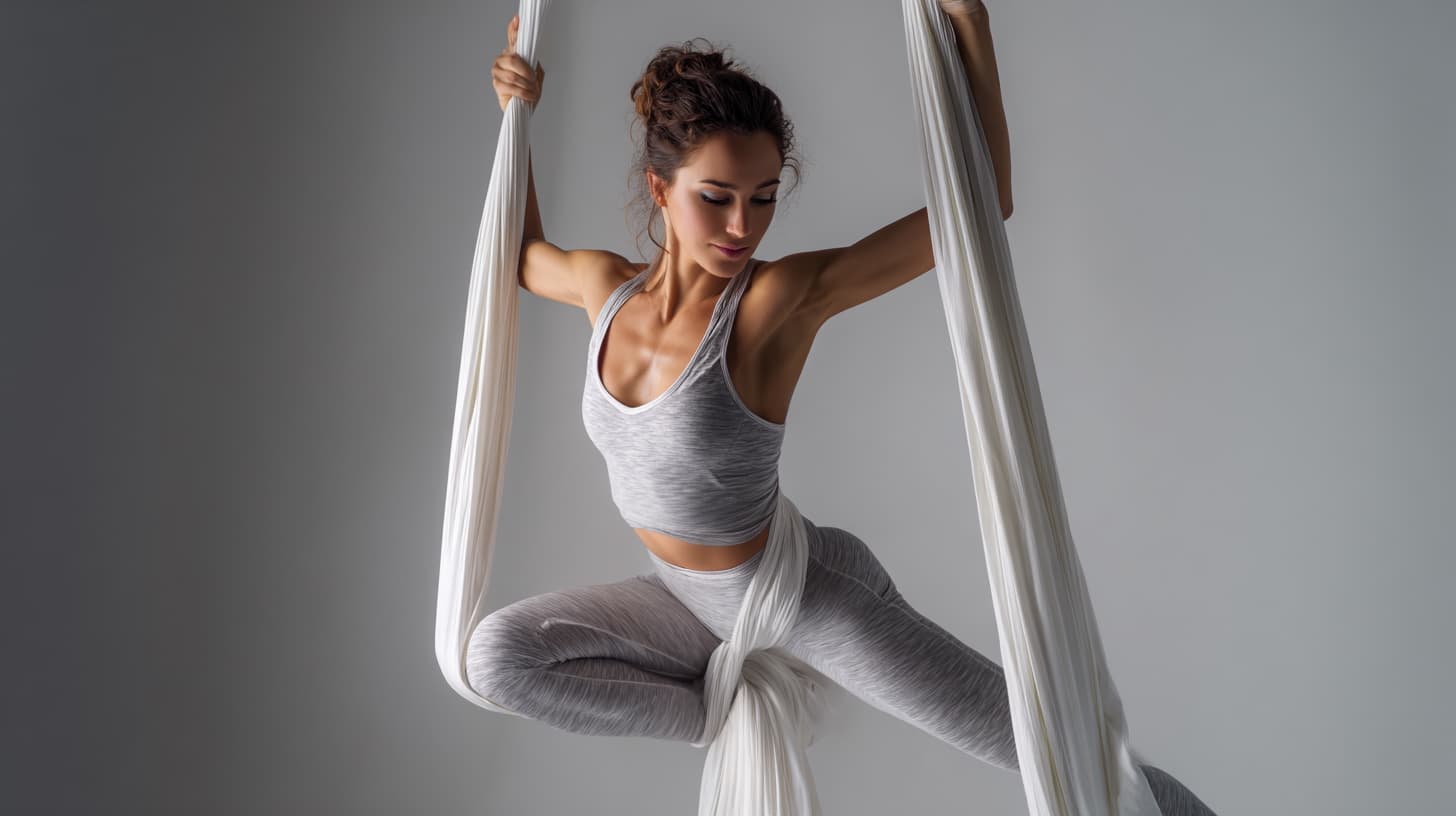
Aerial strength training flips the script on conventional fitness. Instead of sitting on a machine that guides your movement, you work with your own body weight suspended in the air. Every movement demands coordination, balance, and engagement from multiple muscle groups at once.
This is what trainers call functional movement - exercises that mimic real-world patterns rather than isolating individual muscles. When you climb aerial silks, you're not just working your biceps. You're pulling, gripping, stabilizing your core, squeezing your legs, and controlling your descent, all at the same time.
The other key difference? It's genuinely fun. You're learning skills, mastering new figures, and progressing through an art form. The strength comes as a side effect of doing something you actually enjoy. You'll finish a session drenched in sweat and wonder where the hour went.
Muscles you'll build with aerial training
One of the biggest advantages of aerial acrobatics as a full body workout is that no muscle gets left behind. Here's how different areas of your body come into play.
Upper body
Aerial training is exceptional for building upper-body strength. Climbing, holding your body weight, and transitioning between figures all demand serious work from your:
- Latissimus dorsi and back muscles - the primary movers in pulling yourself up
- Biceps and forearms - essential for gripping fabric, hoop, or hammock
- Shoulders and deltoids - stabilizing your body during holds and inversions
- Chest and triceps - engaged during pushes, levers, and controlled descents
Many aerialists develop impressive pulling strength without ever touching a pull-up bar in a gym.
Core
If there's one area aerial training transforms fastest, it's the core. Almost every aerial movement requires trunk stabilization, whether you're holding a static pose, inverting, or controlling a spin. You'll build strength in your:
- Rectus abdominis - the "six-pack" muscles that flex your spine during inversions
- Obliques - critical for twisting movements and asymmetric holds
- Deep stabilizers (transverse abdominis) - the inner corset that keeps you steady in the air
- Lower back - works constantly to support backbends and arched poses
Forget endless crunches. A single aerial class will challenge your core more than thirty minutes of floor exercises.
Lower body
People are often surprised by how much leg work aerial training involves. Your legs aren't just hanging there - they're active participants:
- Hip flexors and quads - lifting your legs for inversions and straddles
- Hamstrings and glutes - squeezing to hold wraps, control splits, and maintain positions
- Inner thighs (adductors) - gripping the apparatus between your legs is a signature aerial skill
- Calves and feet - pointing, flexing, and hooking around fabric or hoop
Aerial vs gym: a practical comparison
| Traditional gym | Aerial training | |
|---|---|---|
| Muscle engagement | Isolated, one group at a time | Multiple groups simultaneously |
| Movement type | Repetitive, machine-guided | Dynamic, bodyweight-based |
| Core involvement | Only during dedicated core exercises | Constant, in every movement |
| Coordination | Minimal | High - body awareness is essential |
| Flexibility | Separate stretching needed | Built into training naturally |
| Motivation | Can become monotonous | Skill-based progression keeps things fresh |
| Functional strength | Moderate | High - translates to real-world movement |
This isn't to say the gym is bad. Weight training has clear benefits, especially for building maximum strength or targeting specific weaknesses. But if your goal is well-rounded, functional fitness that you'll actually stick with, aerial training is hard to beat.
Complementary training at Flying Stars
At Flying Stars in Bratislava, we've designed our class schedule so you can build a complete training program around aerial disciplines and supporting classes.
Aerial classes for strength:
- Aerial silks - the ultimate upper-body and core challenge, with climbing and dynamic wraps
- Aerial hoop - builds grip strength, shoulder stability, and incredible core control
- Aerial hammock - a great entry point that still delivers a serious full-body workout
- Aerial loops - focused on upper-body power and fluid transitions
Supporting classes for balanced fitness:
- Core Stability - targeted work on the deep stabilizers that make you stronger in the air
- Pilates - builds controlled strength, alignment, and body awareness
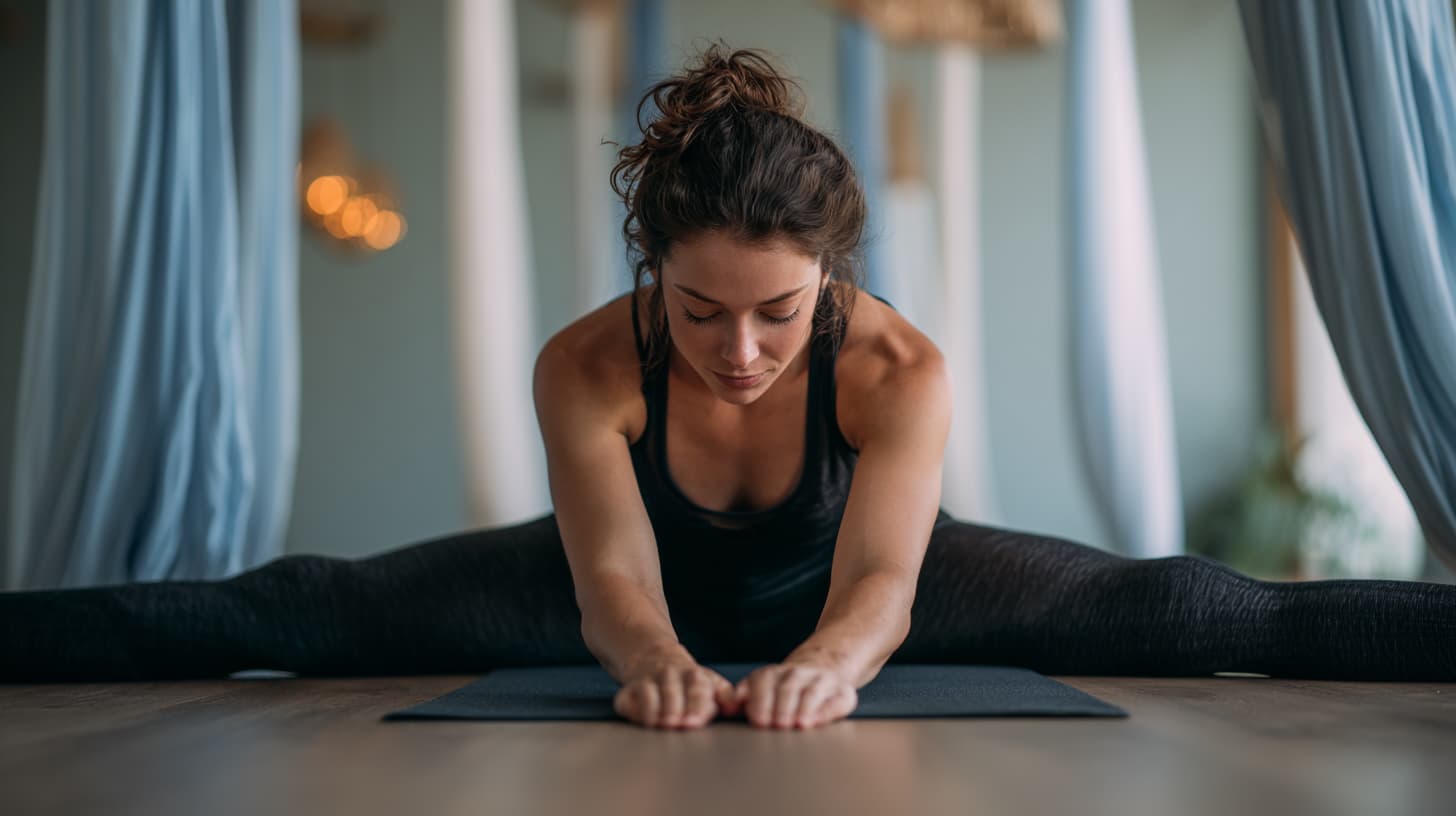
- Stretching - improves the flexibility you need for beautiful lines and injury prevention
The combination works. Aerial classes build raw strength through exciting, skill-based training, while Pilates, Core Stability, and Stretching fill in the gaps to keep your body balanced and injury-free.
Ready to ditch the gym routine?
You don't need to choose between getting strong and having fun. Aerial training delivers both - a full body workout that builds real, functional strength while teaching you something extraordinary.
Whether you're a complete beginner or a gym regular looking for something new, our trainers at Flying Stars will meet you where you are and help you progress at your own pace. Come try a class and feel the difference for yourself.