Why flexibility matters for aerial arts
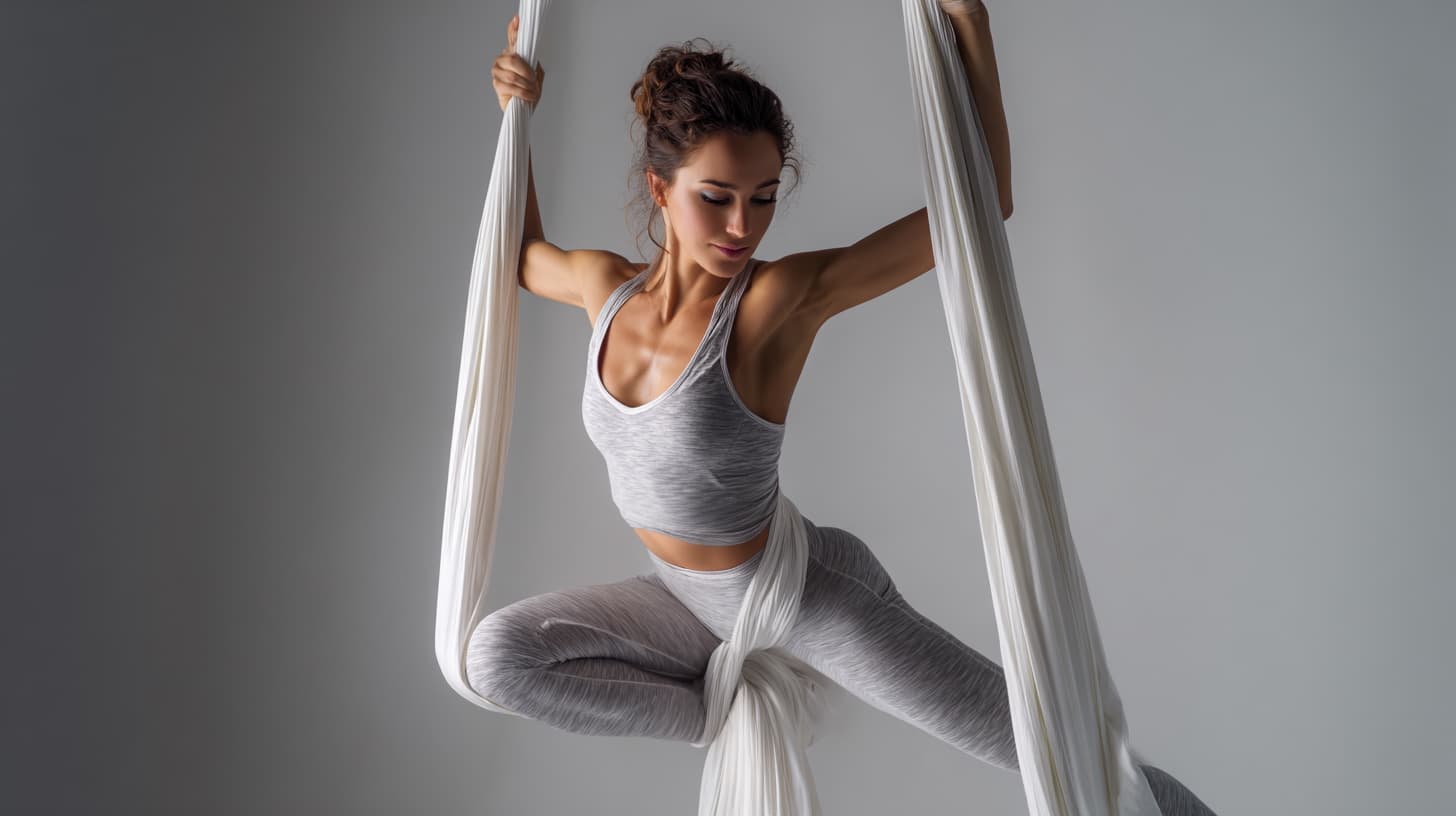
If you train aerial silks, hoop, hammock, or any other apparatus, you already know that strength alone won't cut it. Flexibility exercises are the secret ingredient that turns a solid hold into a breathtaking line and a basic figure into something truly spectacular. Better range of motion means you can achieve deeper wraps, cleaner splits, and more expressive shapes in the air - all while reducing your risk of injury.
Stretching for aerials isn't just about doing the splits (although that's a great goal). It's about functional mobility in your shoulders, spine, hips, and wrists - the joints that do the most work every time you climb, invert, or hold a pose. The good news? You can build aerial flexibility at home with nothing more than a mat and 20-30 minutes of dedicated practice.
Important rules before you start
Before you dive into the exercises, keep these four principles in mind. They'll keep you safe and help you make real, lasting progress.
- Warm up first - never stretch cold muscles. Five minutes of light cardio - jumping jacks, jogging in place, or a brisk walk - is enough to raise your body temperature and prepare your tissues for stretching.
- No bouncing - static stretches should be held steadily. Bouncing (ballistic stretching) can trigger a protective reflex in your muscles and actually increase your risk of a strain.
- Breathe - deep, slow breathing helps your nervous system relax and allows your muscles to release tension. Exhale as you ease deeper into each stretch.
- Consistency over intensity - stretching for 20 minutes four times a week beats a single 90-minute session. Your body adapts through regular, gentle stimulus, not through forcing.
The 10 exercises
1. Standing Forward Fold (Pike)
Stand with your feet hip-width apart and fold forward from the hips, letting your head hang heavy. Keep a micro-bend in the knees if your hamstrings are tight. Let gravity do the work. Hold for 45-60 seconds. This stretch targets your hamstrings and lower back - two areas that are constantly engaged when you climb silks or invert on the hoop.
2. Low Lunge (Hip Flexor Stretch)
Step one foot forward into a deep lunge with your back knee resting on the floor. Sink your hips down and forward while keeping your torso upright. You should feel a deep stretch in the hip flexor and quad of your back leg. Hold 45-60 seconds per side. Open hip flexors are essential for clean leg lines and comfortable straddle sits on any apparatus.
3. Straddle Stretch
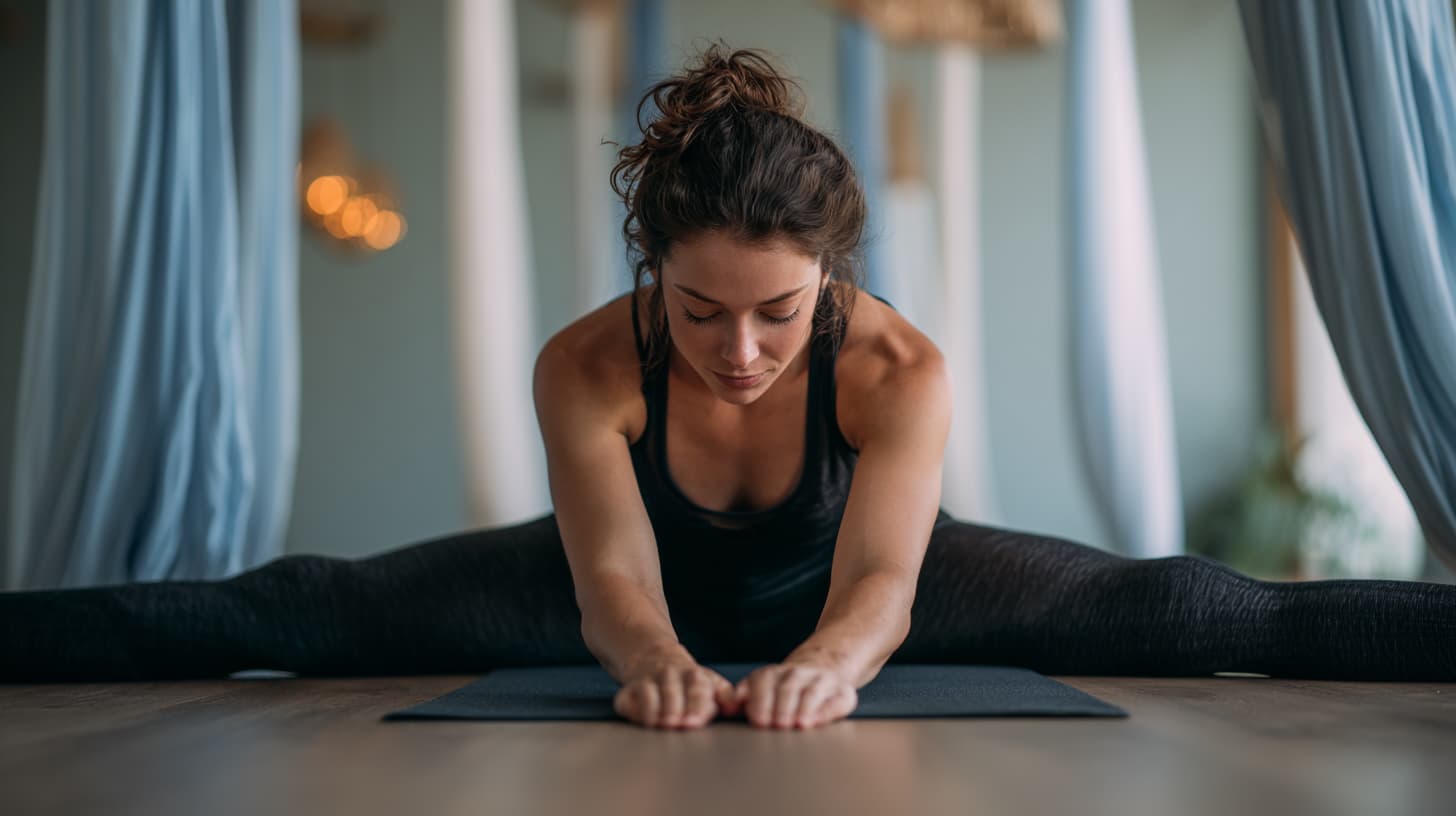
Sit on the floor with your legs spread wide. Keep your knees and toes pointing toward the ceiling. Sit tall, then gently lean forward from the hips, walking your hands out in front of you. Hold for 60 seconds. This stretch opens your inner thighs and hamstrings - the key muscles behind every straddle, star, and side split figure in the air.
4. Pigeon Pose
From a tabletop position, bring one shin across your body so your front knee is behind your wrist and your back leg extends straight behind you. Square your hips as much as possible and fold forward over your front shin. Hold for 60 seconds per side. Pigeon pose is one of the best hip openers available and releases deep tension in the glutes - a game-changer for leg-hang comfort.
5. Shoulder & Chest Opener (Doorway Stretch)
Stand in a doorway and place your forearms on each side of the frame at shoulder height. Step one foot through the doorway and gently lean forward until you feel a stretch across your chest and the front of your shoulders. Hold for 45 seconds. Open shoulders are crucial for back-balance positions, meathooks, and any figure that requires reaching behind you on the apparatus.
6. Bridge
Lie on your back with your knees bent and feet flat on the floor. Press through your hands and feet to lift your hips and chest off the ground, arching your spine upward. Work toward straightening your arms over time. Hold for 20-30 seconds, repeat 3 times. The bridge develops spinal extension and shoulder flexibility simultaneously - exactly what you need for drops and back-bends in the air.
7. Pancake Stretch
Sit in a wide straddle and fold your torso forward, aiming to bring your belly and chest to the floor. Keep your back as flat as possible rather than rounding. Hold for 60-90 seconds. The pancake is a deep straddle with a forward fold, and it directly transfers to straddle-ups, inversions, and many hammock and loops figures.
8. Wrist Stretches
Kneel on all fours and place your palms flat on the floor with your fingers pointing toward your knees. Gently shift your weight back until you feel a stretch in the front of your wrists. Then flip your hands so the backs of your hands are on the floor and gently lean forward. Hold each position for 30 seconds. Wrist mobility is often overlooked, but it's critical for gripping fabric, rope, and metal without pain or strain.
9. Cat-Cow
Start on all fours. On an inhale, arch your back, drop your belly toward the floor, and lift your head (cow). On an exhale, round your spine toward the ceiling, tuck your chin, and draw your belly in (cat). Repeat slowly for 10-12 cycles. Cat-cow warms up your entire spine, builds segmental mobility, and teaches you the body awareness you need for controlled movement in the air.
10. Half Split (Runner's Stretch)
From a low lunge position, shift your hips back over your rear knee and straighten your front leg. Flex your front foot and hinge forward from the hips, keeping your back flat. Hold for 45-60 seconds per side. The half split is a safer, more accessible way to work toward a full front split while deeply stretching the hamstrings and calves.
Weekly practice schedule
Consistency is more important than marathon sessions. Here's a simple schedule you can follow alongside your aerial training:
- Monday - full flexibility routine (all 10 exercises), 25-30 minutes
- Wednesday - lower body focus (exercises 1, 2, 3, 4, 7, 10), 15-20 minutes
- Friday - upper body and spine focus (exercises 5, 6, 8, 9), 10-15 minutes
- Sunday - full flexibility routine again, 25-30 minutes
Feel free to adjust this around your class schedule at the studio. On days when you train aerials, your warm-up and cool-down can include several of these stretches.
When to expect results
If you follow a schedule like the one above, you can expect to notice meaningful changes within 4-6 weeks of consistent practice. The first thing most people notice is that movements feel easier - your low lunge sinks deeper without effort, your forward fold reaches further, and your straddle on the apparatus feels more controlled.
Visible progress - like gaining centimetres toward your splits or touching your chest to the floor in a pancake - typically comes between weeks 6 and 12, depending on your starting point and genetics. The key is to trust the process and not force it. Flexibility is a long game, and every session builds on the last.
Ready to put your new flexibility to work in the air? Check out the class schedule at Flying Stars in Bratislava - we offer Aerial Silks, Aerial Hoop, Aerial Hammock, Aerial Loops, and dedicated Stretching classes to help you reach your goals faster. Book your next session and feel the difference!